What is the immigrant visa queue? The U.S. Department of State publishes a monthly Visa Bulletin listing per-country, per-category cutoff dates based on annual quotas. You can only move forward when your priority date is earlier than the cutoff (or marked "Current").
Find your priority date
Your priority date is the day USCIS receives your I-130 or I-140 petition.
- Family-based: Receipt date of the I-130 petition
- Employment-based: Receipt date of the I-140 petition
(For EB-2 / EB-3 PERM cases, the PERM filing date controls)
This date is printed on the I-797 Receipt Notice USCIS mails to you.
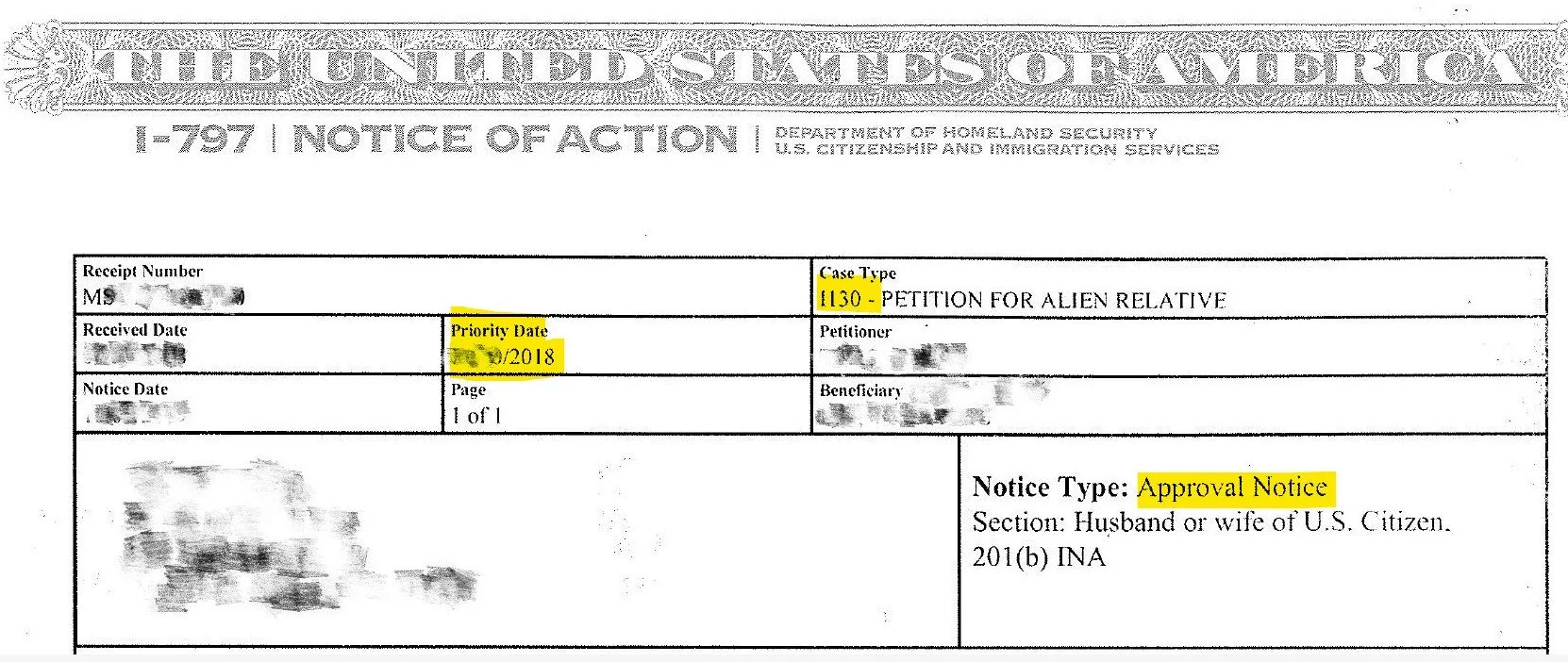
▲ Sample I-797 Receipt Notice — priority date appears in the upper section
Read the monthly Visa Bulletin
The Department of State publishes next month's Visa Bulletin around mid-month. Each month has two charts: Final Action Dates (Chart A) and Dates for Filing (Chart B). The next step explains the difference.
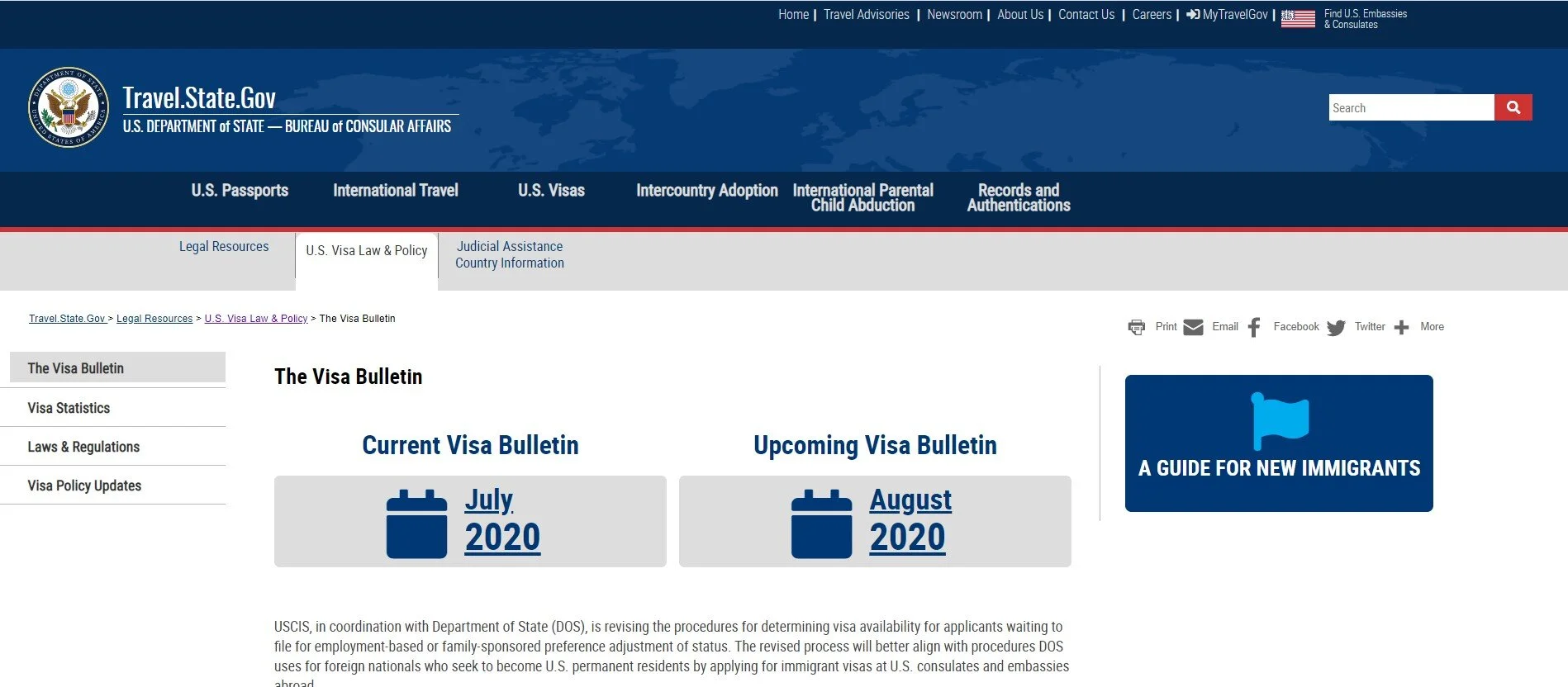
▲ Visa Bulletin sample
Latest Visa Bulletin →Chart A vs. Chart B
Final Action Dates (Chart A): when your priority date is earlier than this date, USCIS can formally approve your I-485 or issue your immigrant visa.
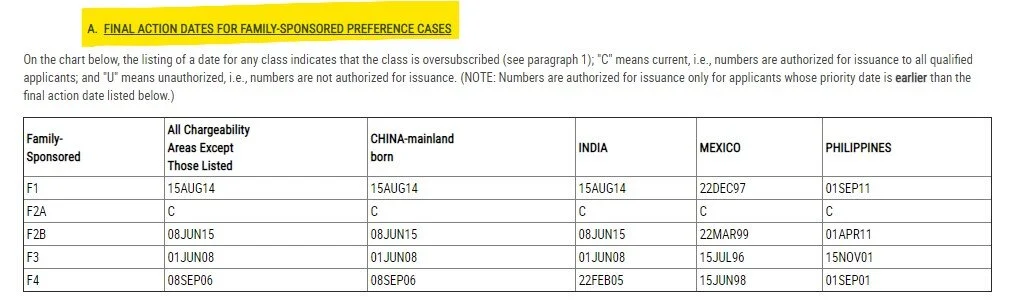
▲ Final Action Dates (Chart A) sample
Dates for Filing (Chart B): when your priority date is earlier than this date, you may file early, but the case will not be approved until Chart A also reaches your priority date.
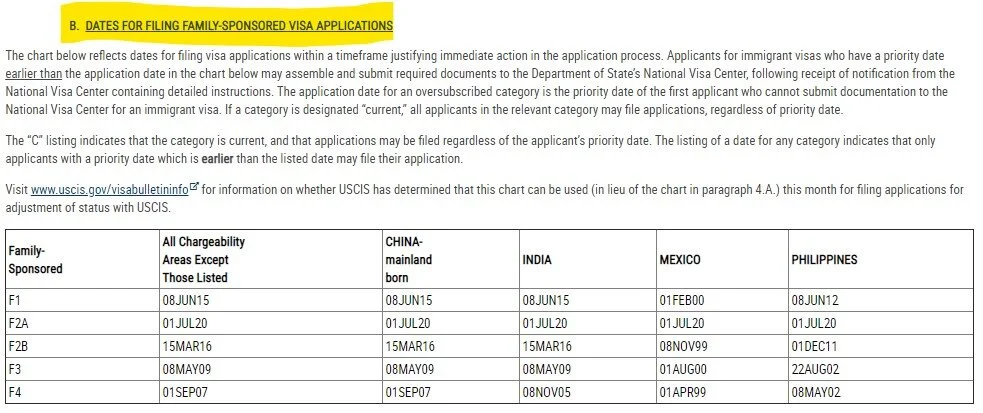
▲ Dates for Filing (Chart B) sample
Each month, USCIS decides which chart it will accept next month for I-485 filings. Always check the USCIS announcement before filing.
USCIS AOS Filing Charts →Know your green card category
The Visa Bulletin organizes categories as follows:
- Family-based: F1 (adult unmarried children of citizens), F2A (spouse / minor children of LPRs), F2B (adult unmarried children of LPRs), F3 (married children of citizens), F4 (siblings of citizens)
- Employment-based: EB-1 (extraordinary ability / multinational executives), EB-2 (advanced degree / NIW), EB-3 (skilled workers / professionals / unskilled), EB-4 (special immigrants / religious), EB-5 (investor)
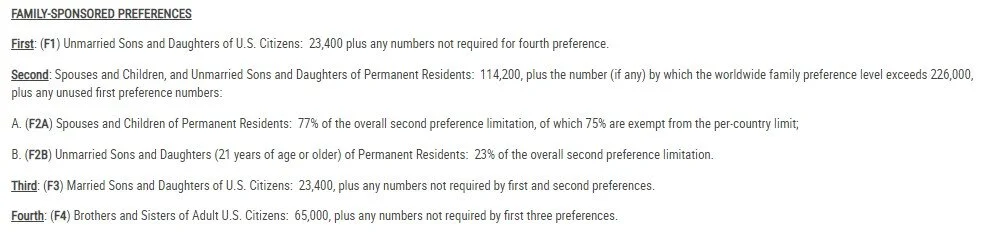
▲ Family-based categories overview
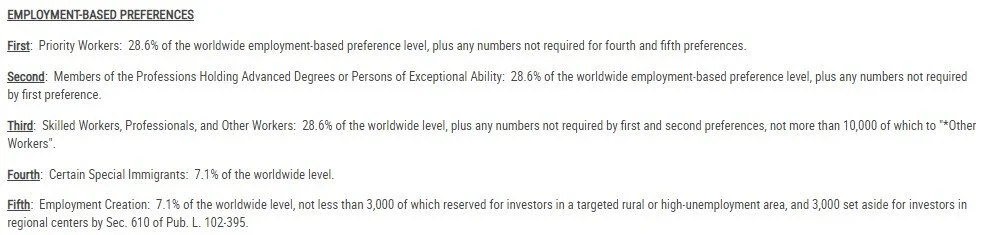
▲ Employment-based categories overview
⚠️ Immediate relatives of U.S. citizens (spouse, minor children, parents) are not subject to the visa quota and may file at any time.
Determine what you can do this month
To read the Visa Bulletin:
- Find your category (e.g., EB-2)
- Find your country of birth (China, India and a few others have separate quotas)
- Compare your priority date against the listed cutoff
- If your priority date is earlier than the cutoff, or the cell shows "C" (Current), you can move to the next step
Note: The Visa Bulletin changes every month and can also retrogress (move backward) — meaning what you can file this month may not be possible next month. This is especially common for China- and India-born applicants in EB-2 / EB-3. Track each month's changes closely and consult counsel about the optimal filing strategy.